
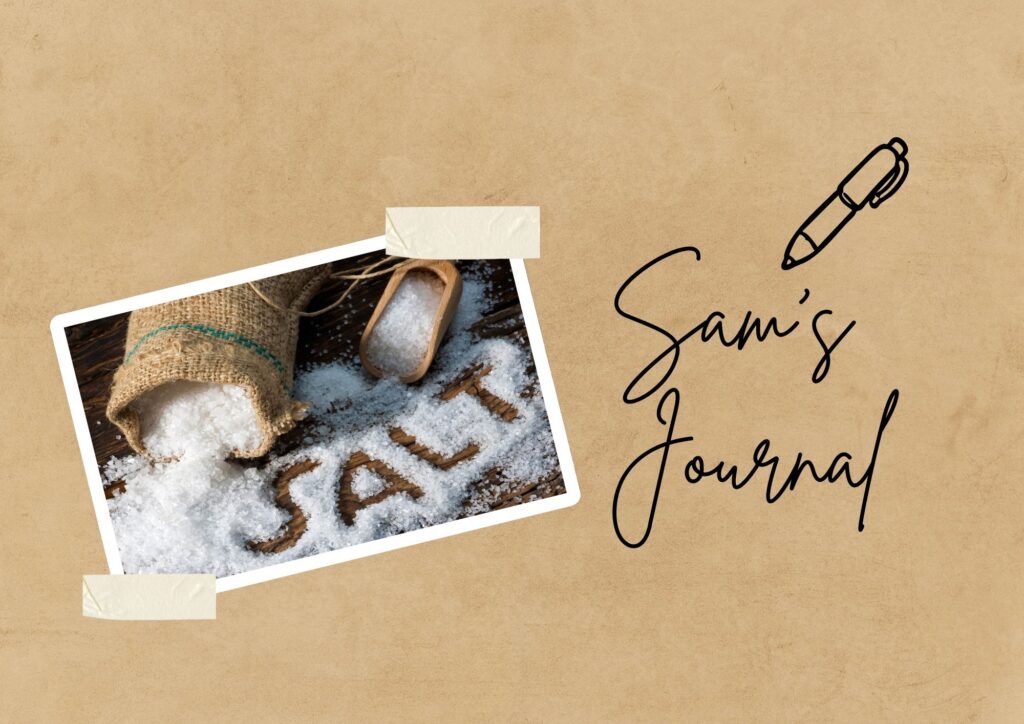

I’m sitting in my favorite barbershop, waiting for a haircut. The shop is small but cozy, and today I’m joined by two other men. The conversation turns to a recent incident in our area, where people looted salt from a truck involved in an accident.
We all burst out laughing at the absurdity of it. Stealing salt? In bulk? It seems pointless.
Salt is so cheap, and it’s not exactly the kind of thing you sell off quickly to turn a profit.
“I use about a kilo every two months, so the idea of taking such a risk—looting a crashed truck for bags of it—feels ridiculous,” I say. Maybe we just don’t understand the economy of salt… or are we all just clueless?
Then again, maybe there’s a deeper reason behind it. Some people in rural areas sometimes see looting as an opportunity, a rare chance to grab something they wouldn’t otherwise afford in large quantities. Even something as ordinary as salt might feel like a small windfall if you’re struggling to make ends meet. Maybe for them, it’s less about profit and more about the allure of getting something for free—even if it means carrying home sacks of a nearly valueless commodity.
It also makes me wonder about how our perception of value changes based on circumstances. For someone who’s well-off, salt may not be worth a second thought. But in a struggling household, a large stash of it could mean saving a few coins that would otherwise be spent on groceries. Perhaps in a tight-knit community like ours, where people share resources, looted salt could even become a form of trade or bartering, far beyond the conventional marketplace.
Still, there’s a strange irony in risking your life or freedom to loot something so commonplace. It’s as if the desperation of the situation clouds judgment.
You see a truck overturned, an open opportunity, and suddenly it doesn’t matter if it’s gold or salt—you just want to take advantage of it. Maybe it’s not even about the salt itself, but the thrill of taking something in the chaos, a small rebellion against the daily grind of life.
