

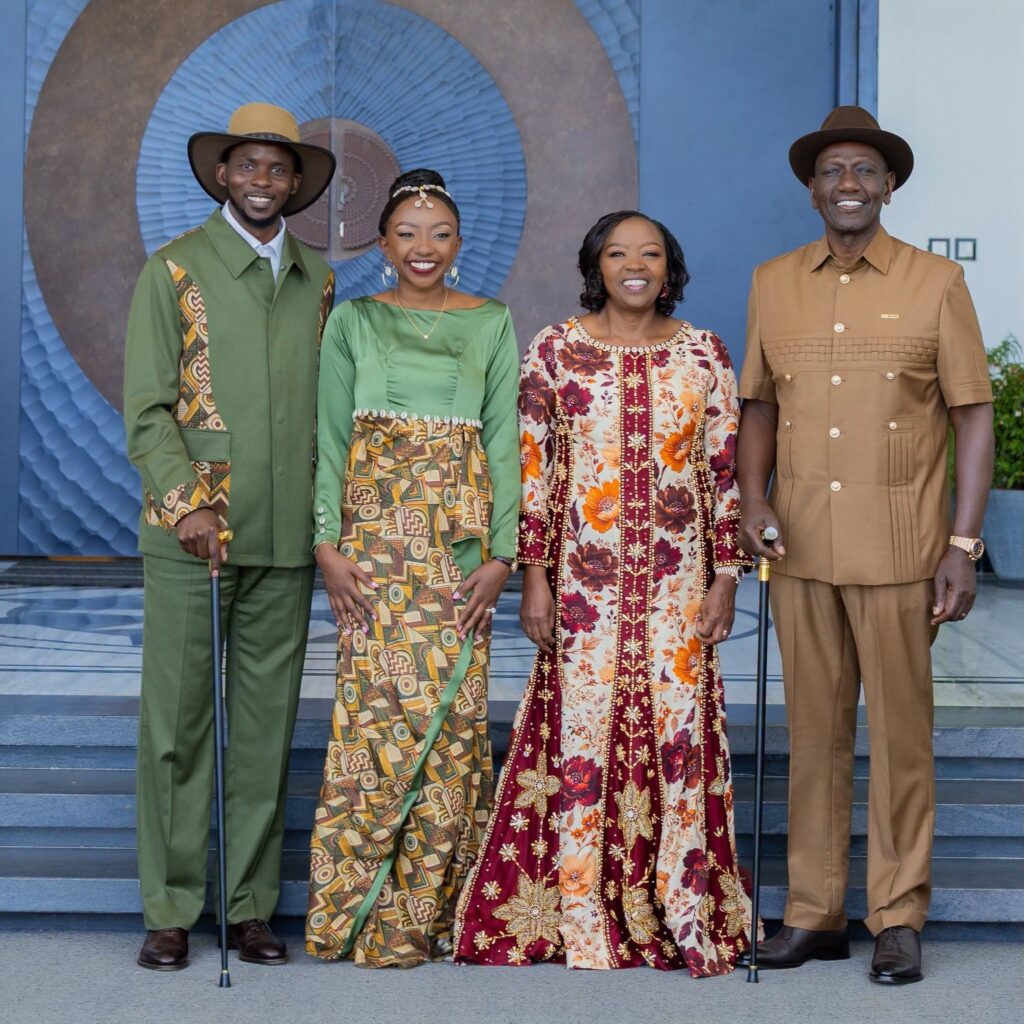
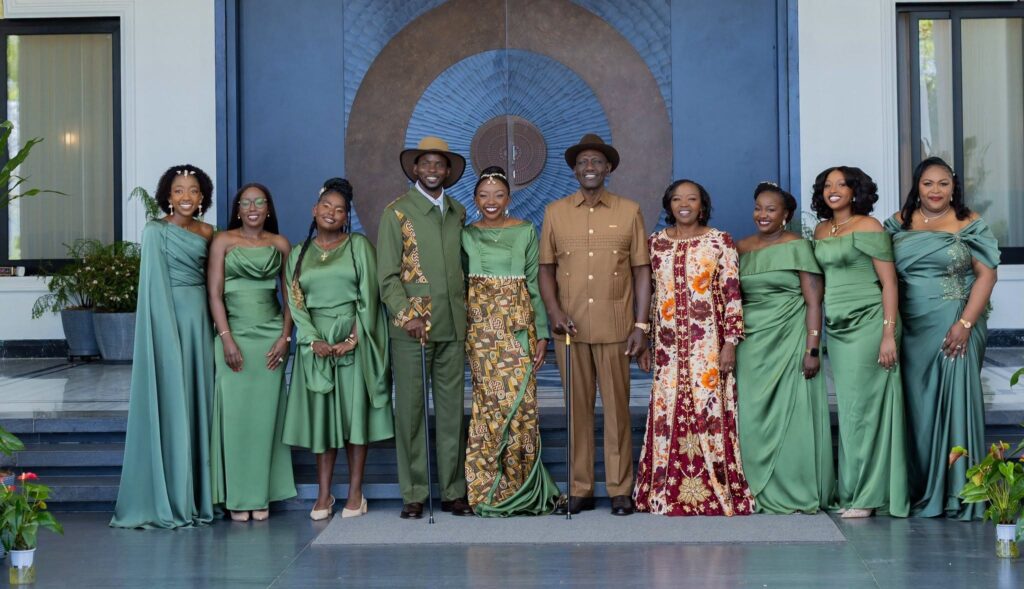
President William Ruto’s daughter Charlene Ruto’s traditional Koito ceremony with her Tanzanian fiance, Isaya Yunke, in Kilgoris on Saturday turned into more than a family affair, attracting a sizable gathering of Kenya’s political and business elite.
Held at Intonna Heritage Farm in Naserian Village, Narok County, the colourful Koito ak Chaik ceremony brought together family members, friends, government officials and politicians from across the country.
Among those spotted at the event were Nairobi Governor Johnson Sakaja, Lang’ata MP Phelix Odiwuor popularly known as Jalang’o, nominated Senator Karen Nyamu, Nairobi Woman Representative Esther Passaris, Health Cabinet Secretary Aden Duale, Water Cabinet Secretary Eric Mugaa, Githunguri MP Gathoni Wamuchomba, Bomet Senator Hillary Sigei and Bomet Woman Representative Linet Toto.
There was also Interior CS Kipchumba Murkomen, Kapsaret MP Oscar Sudi and even CNN International’s Larry Madowo, among other high profile guests.

The political presence gave the ceremony a distinctly public dimension. Helicopters ferried some guests to the venue, while luxury vehicles carrying politicians, government officials and other high-profile guests streamed into the expansive family property.
For the Ruto family, however, the occasion remained rooted in tradition. Koito ak Chaik is a Kalenjin engagement and farewell ceremony through which families formally come together and elders bless the bride as she prepares to begin married life. Charlene is engaged to Tanzanian entrepreneur Isaya Yunge.
But the spectacle inevitably invites a broader question: what does the sight of so many political leaders gathering at a president’s family function say to the ordinary Kenyan?
A reminder of how politics works
The most obvious message is the enduring closeness between Kenya’s political class and the country’s centres of power.
A family celebration for the President’s daughter was attended by senior national and county leaders cutting across different political positions. For politicians, such appearances can be about friendship, courtesy, cultural solidarity and maintaining relationships—and it would be unfair to automatically interpret every attendance as political endorsement.
Yet, to the ordinary Kenyan watching from outside the gates, the optics are difficult to separate from politics.
Kenyan politics has long operated through relationships and networks. Access to powerful people matters, and social occasions involving influential families can become important spaces for leaders to maintain those relationships.
The Koito therefore offered another glimpse of a political class that, despite its public differences, can converge when the occasion involves one of its own.
Two Kenyas on display?
There was also a striking contrast at the ceremony.
Inside the venue were politicians arriving in coordinated outfits, government officials, business personalities, traditional performers and guests transported in high-end vehicles, with helicopters adding to the spectacle.
Outside that world is Kenya inhabited by millions of citizens dealing with the everyday pressures of food prices, school fees, rent, unemployment, healthcare costs and the struggle to build a decent livelihood.
The contrast does not necessarily make the ceremony wrong or inappropriate. Wealthy families, just like ordinary families, have a right to celebrate important milestones according to their means. But it does underline the enormous distance between the lived experiences of Kenya’s political elite and those of many of the citizens they represent.
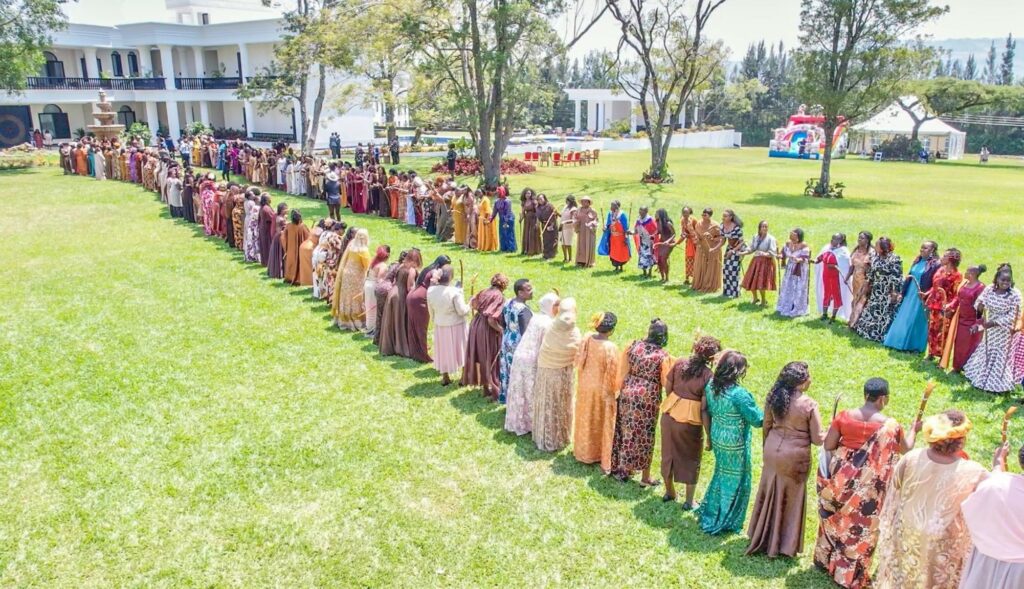
For the commoner, the images from Kilgoris can therefore be interpreted in two ways: as a beautiful celebration of African culture and family, or as another reminder of how differently the country’s elite experience life.
Politics stops at the gate?
Perhaps the most revealing aspect was how quickly political differences appeared to disappear around a family celebration.
Leaders who may disagree publicly, belong to different political formations or be positioning themselves ahead of the 2027 elections were able to converge for the President’s daughter’s milestone.
That is not necessarily a bad thing. In fact, Kenyans could reasonably hope that politicians can demonstrate the same ability to coexist, socialise and build bridges beyond private celebrations.