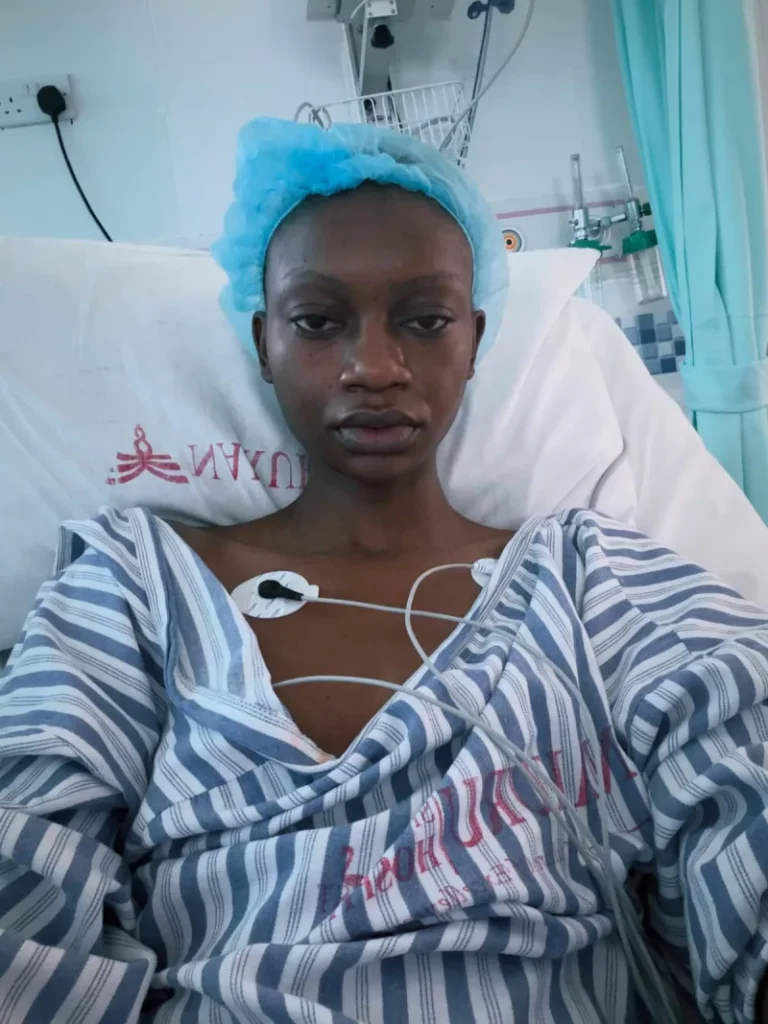

Media personality Natalie Githinji has renewed attention on endometriosis after revealing that she has lived with the condition for 17 years.
Her story has highlighted the physical, emotional and financial challenges that can come with living with the disease for years. It also raises an important question: how many other women are silently living with severe menstrual pain without knowing its cause?
When period pain is more than pain
For many women, painful periods are treated as something they simply have to endure. But when menstrual pain becomes so severe that it interferes with school, work, sleep, relationships or everyday activities, it should not be dismissed as “normal period pain.”
Endometriosis is a chronic condition in which tissue similar to the lining of the uterus grows outside the uterus, causing inflammation, pain and, in some cases, scar tissue and adhesions.
The World Health Organization estimates that endometriosis affects about 10 per cent of women and girls of reproductive age worldwide, equivalent to approximately 190 million people. Symptoms can include severe menstrual cramps, chronic pelvic pain, lower back pain, pain during sex, pain when passing stool or urinating, heavy bleeding, bloating and fatigue.
Why diagnosis takes years
One of the biggest challenges is delayed diagnosis. According to the WHO, the period between the onset of symptoms and diagnosis can range from four to 12 years. Severe menstrual pain may be normalised by families, communities and even women themselves, allowing the condition to go untreated for years.
Endometriosis and fertility
Endometriosis can also affect fertility. The WHO estimates that among women experiencing infertility, as many as 25 to 50 per cent may have endometriosis. However, having the condition does not mean a woman cannot have children. Some conceive naturally, while others may require medical or fertility assistance.
Pregnancy is also not a cure for endometriosis, despite the common belief that it will permanently eliminate the pain. Diagnosis usually begins with a healthcare professional assessing a woman’s symptoms and medical history.
Doctors may use examinations and imaging such as ultrasound or MRI, while in some cases laparoscopy may be recommended. Treatment depends on the individual and can include pain medication, hormonal treatment and, where necessary, surgery.
The Kenyan challenge
In Kenya, access to diagnosis and specialised treatment remains a challenge for many women. Consultations, tests, medication and surgery can be expensive, while specialist services may not be easily available, particularly for women living far from major towns and cities. This can make endometriosis both a health and financial burden.
Natalie is not the first Kenyan woman to use her voice to draw attention to the condition. The late media personality Njambi Koikai became one of the country’s most recognised voices on endometriosis, openly sharing her long battle with the disease before her death in June 2024.
Her story helped bring national attention to a condition that many women had suffered from quietly.
Women deserve to be heard
The stories of women such as Njambi and Natalie underline the need for greater awareness, earlier diagnosis and more accessible specialised care. Schools, families and communities can also help by teaching young girls that while menstruation is normal, pain that is severe or disruptive should not simply be endured.
For generations, women have been told to tolerate menstrual pain in silence. But a woman who cannot get out of bed, attend school, go to work or live normally because of her period deserves more than a reminder to endure. When a woman says, “This pain is not normal for me,” she deserves to be heard. Sometimes, behind what people call “just period pain” is a woman who has been asking for help for years.