
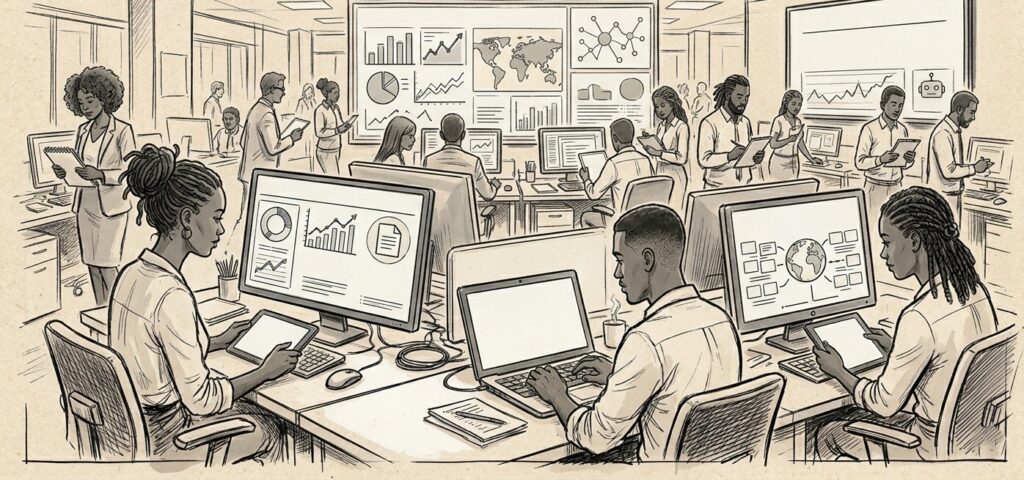

WKT readers may have noticed some of our news alert posters carrying labels such as “AI-generated image” or “Image enhanced by AI.” Years ago, while studying AI in media school, I never imagined a future where newsroom editors would actively rely on such technology in daily production.
Today, AI has become deeply embedded in content creation and is steadily finding its place in modern newsrooms. While it has contributed to growing public skepticism toward content shared online, AI has also emerged as a powerful tool for journalism, helping verify facts, analyse images, detect misinformation, and even identify bias within news reporting.
Still, the rise of AI presents an ethical challenge for journalists and editors whose responsibility is to uphold truth and credibility. The temptation to manipulate visuals or tailor content to fit a preferred narrative remains real. That is precisely why WKT clearly labels AI-assisted images: to remain transparent with our readers and openly acknowledge the role technology plays in enhancing our storytelling and improving how information is presented.
Some readers have questioned whether media platforms should avoid AI altogether and return to a more traditional style of news production. One WKT reader recently emailed us asking whether we could preserve the platform’s classic digital identity instead of embracing emerging trends. It is a valid concern, but can journalism realistically ignore technological evolution?
While it is possible to limit AI-generated content, doing so does not necessarily guarantee greater authenticity. In many cases, AI-generated visuals help explain complex events more effectively, provide clearer graphical representation, and allow readers to better understand stories and form independent judgment. Removing such tools entirely could sometimes limit how audiences consume and interpret information.
Beyond visuals, AI is also helping journalists work more efficiently behind the scenes. From transcribing interviews and translating information to organising data and detecting misinformation faster, these tools are allowing newsrooms to spend more time focusing on accuracy, storytelling, and meaningful reporting. Technology is not replacing journalism, it is supporting journalists in delivering information more effectively in a fast-moving digital age.
At the same time, human judgment remains at the centre of every story published by WKT. AI cannot replace editorial ethics, community understanding, or the emotional intelligence required in responsible journalism. Every piece of content still passes through human review to ensure fairness, context, and accuracy before reaching our audience.
In a rapidly evolving digital world, adapting to technology is no longer optional for competitive media organizations. Resisting innovation often risks being left behind. At WKT, however, our commitment remains unchanged: we use AI responsibly and strictly as a tool to improve the quality, clarity, and accessibility of our content while preserving the human connection, natural conversations, and community-centered journalism that have always defined our platform.