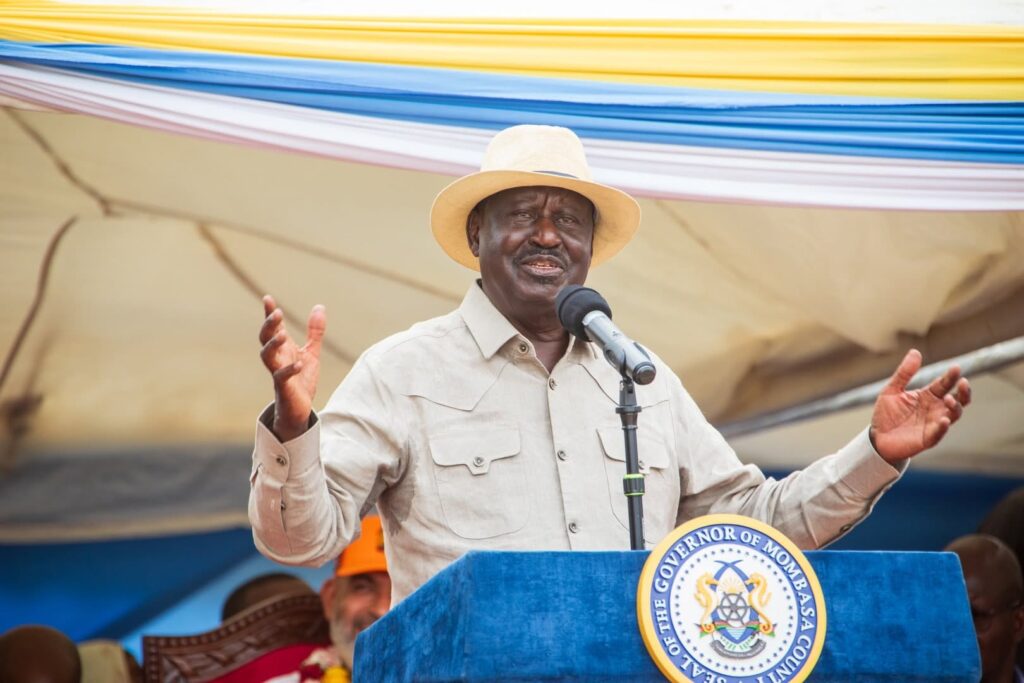

One year after the passing of former Prime Minister Raila Amolo Odinga, Kenyans are still telling stories of his ties to communities across the country. Among the most cherished is his bond with the Wanga Kingdom of Kakamega County.
For years, Raila spoke with pride of tracing his ancestry to the royal line of Nabongo Wanga, the legendary founder of the kingdom. At rallies and cultural gatherings in Western Kenya, he described himself as the 13th descendant of Nabongo Wanga and recalled that his grandfather lay buried in Matungu, the heartland of Wanga territory.
The Wanga people received these words with delight and embraced him as their own.
It was more than rhetoric. Raila nurtured a warm relationship with the Wanga monarchy, especially with Nabongo Peter Mumia II, the present cultural leader and a descendant of Nabongo Mumia. Their mutual respect bore fruit in 2008, when Raila backed the opening of the Nabongo Mumia Cultural Centre, a project meant to honor the kingdom’s history and draw visitors to the region.
For many Wanga, his claim carried a deeper meaning. In a country where politics so often splits along ethnic lines, Raila chose to reach across them. He believed Kenya’s diversity was a strength, not a fault line, and his embrace of a wider ancestry gave that belief a human face.
The politics were there too. Western Kenya remained among his most loyal strongholds, and his Wanga identity reinforced a sense of shared destiny between the Luo and Luhya communities. Yet the bond rested on something beyond votes: common traditions, mutual respect, and a keen sense of history.
Even in his later years, he spoke fondly of Nabongo Mumia, the first Luhya king to deal with colonial administrators, and saw echoes of his own journey as a reformist steering through difficult systems of power.
Raila’s story with the Wanga remains a bridge between Kenya’s past and present, a reminder that a nation is best built by those who know where they come from.